EDUCATION
How Microneedling Treats Acne Scars: A Facialist's Guide
Amy Halls — CIBTAC-trained, Facialist of the Year Finalist 2024
15 May 2026 · 9 min read
When I had acne in my early 20s it knocked my confidence. I had just started working after university and would apply a thick layer of foundation, "baked" powder over the top, and then layer that with a second layer of foundation.
If you've ever struggled with acne, I really hear you.
It can make you feel deeply self-conscious — and now, a decade on, with clear skin, I still get that wave of anxiety about my skin.
By the time the acne was under control, I had a collection of scars across my cheeks. I tried the masks and the serums and the exfoliants, but the scarring remained and so did the layers of foundation.
Once I understood what was actually happening in scarred skin, I also understood why the things I'd been trying weren't touching it — and what actually could. Microneedling is the reason I retrained. It was the first treatment I found that works where scarring actually lives: underneath the surface.
I did a course of three microneedling facials and the results were incredible. It's why it's the only treatment I offer now — because I know first hand it works.
And now, in my 30s, I use microneedling for a different reason: as an anti-ageing treatment. I'm not interested in Botox (though maybe one day?!) but microneedling builds back the collagen and elastin our skin needs to stay youthful for longer.
But back to acne...
What acne scarring actually is
First, a useful distinction: there's a difference between a dark mark and an actual scar.
The flat, dark patches that often show up after a spot — sometimes called post-inflammatory hyperpigmentation, or PIH — are a pigment response. They look like scarring but there's no structural change to the skin. Many of these fade on their own over months. Microneedling can help speed that up, but they're a different problem to what I'm mainly talking about here.
Actual acne scars involve a change to the architecture of the skin. When inflammation from a breakout damages the collagen structure in the dermis, the skin tries to repair itself — but doesn't always lay down new collagen evenly. The result is a depression, a pit, or an uneven surface that stays long after the spot is gone.
The type of scar you're left with depends on what happened during the healing process.
The main types of acne scar
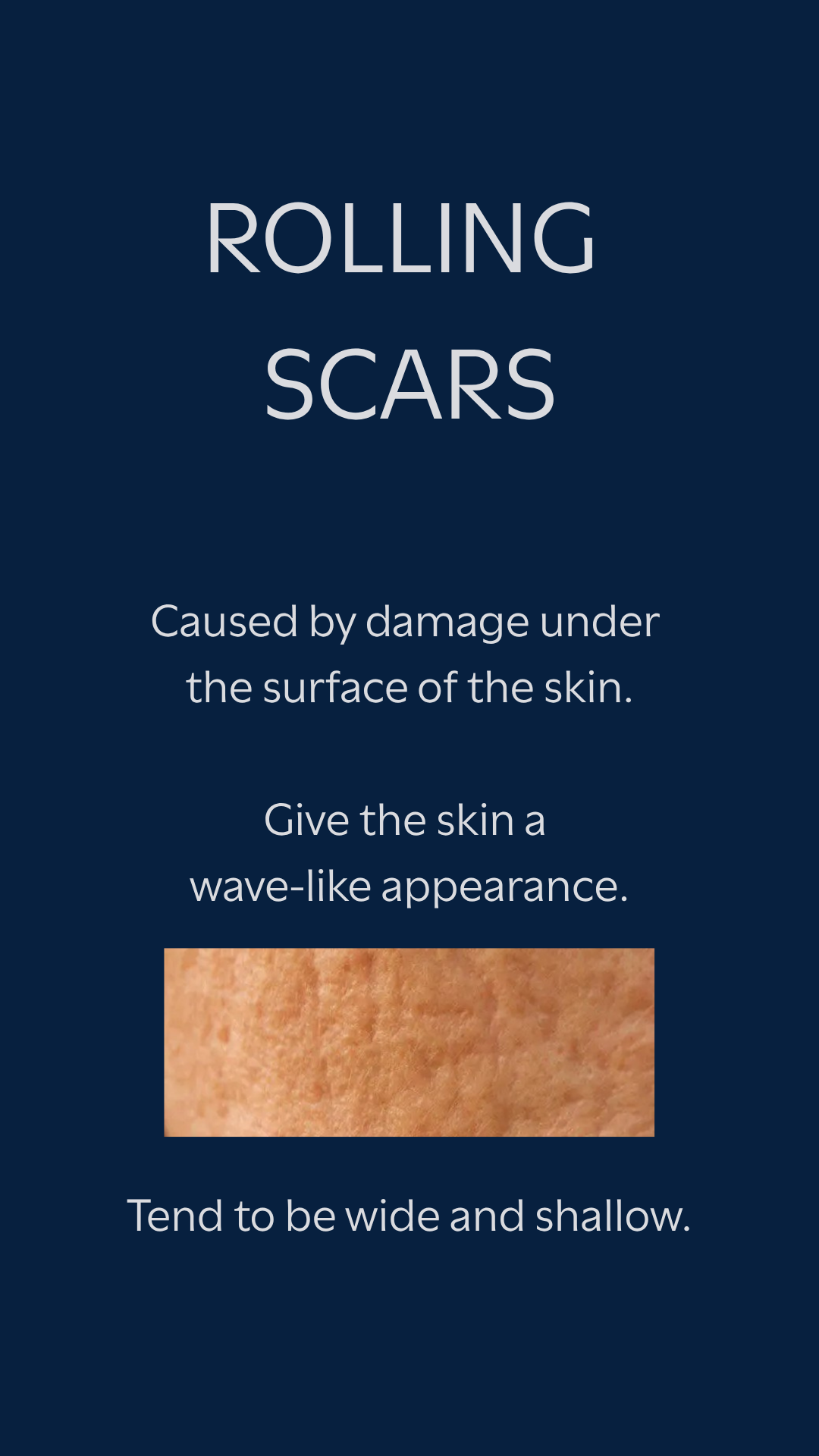
Rolling scars are the most common type I see. They create a wave-like unevenness across the skin — not sharp edges, but a slightly sunken, rolling texture. They're caused by fibrous tissue forming between the skin surface and the deeper layers and pulling the skin down unevenly. In light, especially side-on, they can be very visible. Straight-on, skin can look almost fine. This is why people often say their scars look worse in certain lighting.
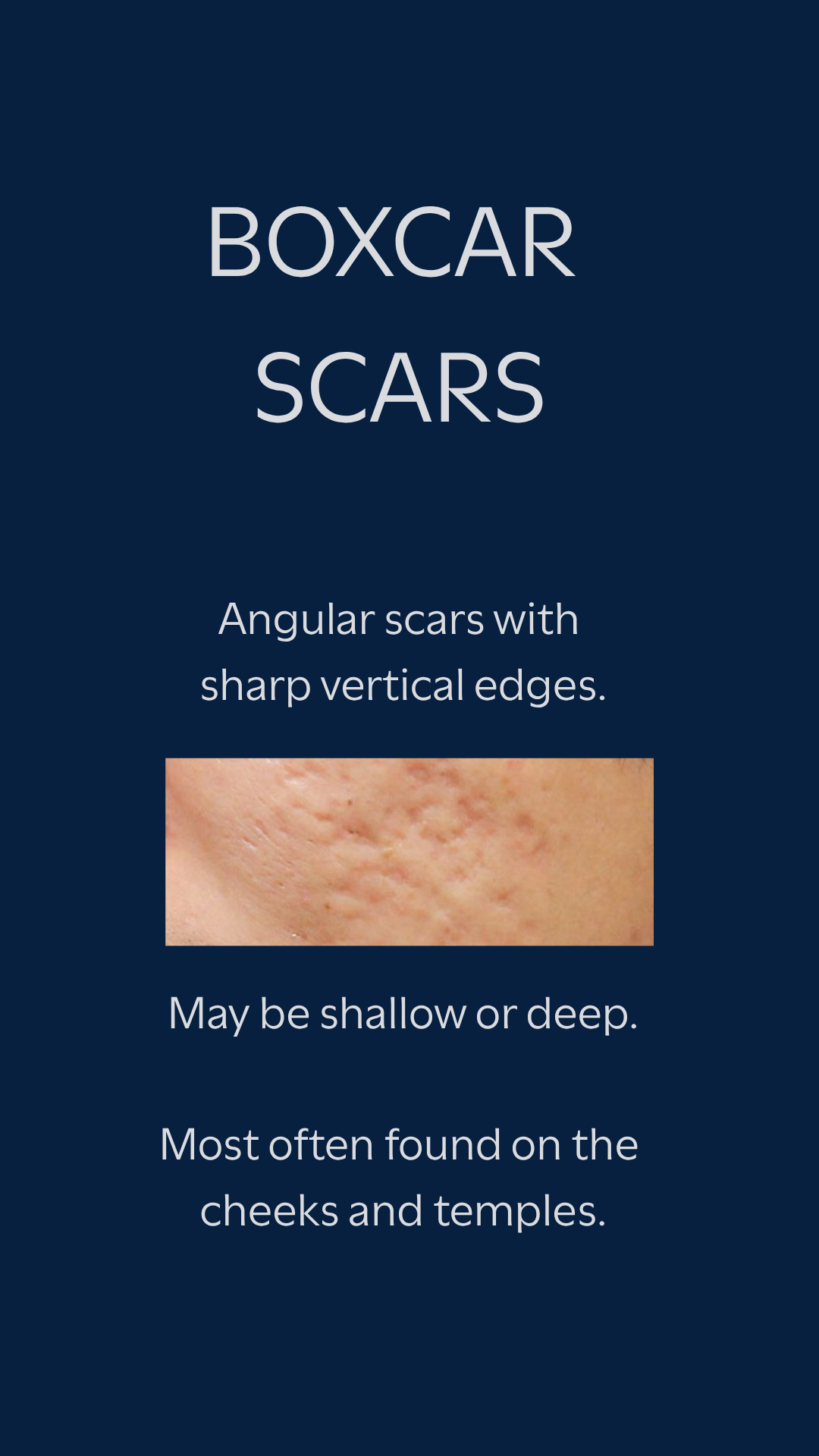
Boxcar scars are more defined — oval or round depressions with relatively sharp, vertical edges. They sit on the surface rather than pulling from below. Shallow boxcar scars respond really well to microneedling. Deeper ones improve significantly too, though it takes more time.
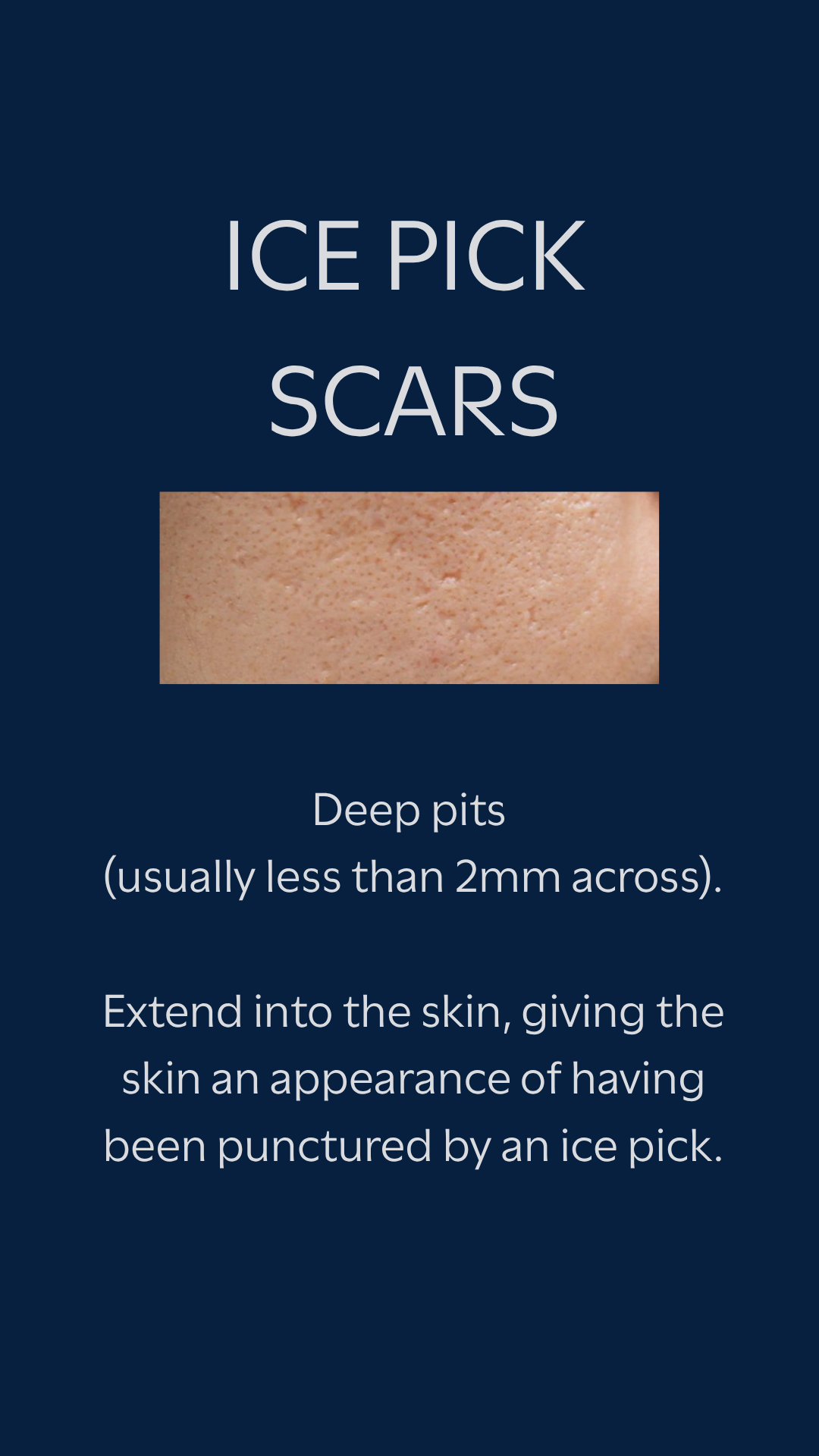
Ice pick scars are narrow and deep — they look like tiny holes in the skin. They're the hardest type to treat with microneedling alone, because they go further down than a needle can effectively reach. For significant ice pick scarring, I'd have an honest conversation with you about whether a different approach — like TCA cross, which targets individual scars with a chemical — might make more sense first, or in combination.
Post-inflammatory hyperpigmentation — the flat dark marks — responds to microneedling through increased cell turnover and improved skin renewal. Results are good, but they take time and need proper SPF management alongside treatment (inflammation without sun protection can make PIH worse before it gets better).
One type microneedling is not suitable for: raised, hypertrophic scarring, or skin with a history of keloid formation. If your skin tends to produce raised scars rather than depressed ones, we'd discuss that in consultation before treating.
How microneedling actually works on scar tissue
When you have a depressed acne scar, what you're looking at is an area where the collagen scaffolding underneath the skin is missing or disrupted.
Microneedling creates thousands of tiny, controlled punctures in and around that area. Your skin reads those punctures as a signal to repair. It responds by producing new collagen and elastin — the proteins that give skin its structure and elasticity.
The key word there is new. The new collagen fills in where the old collagen was lost. Over weeks and months — because this is a biological process, not an overnight switch — the skin begins to remodel. Depressions soften. The surface becomes more even. Rolling unevenness becomes less pronounced.
It's your own biology doing the work. Microneedling just gives it a reason to.
Why the SkinPen specifically matters for scars
Depth control is everything with scar treatment.
A rolling scar on a cheek and a shallow boxcar scar around the jaw involve damage at different depths. Treating them both at the same needle depth would either be too superficial to reach one, or unnecessarily aggressive at the other.
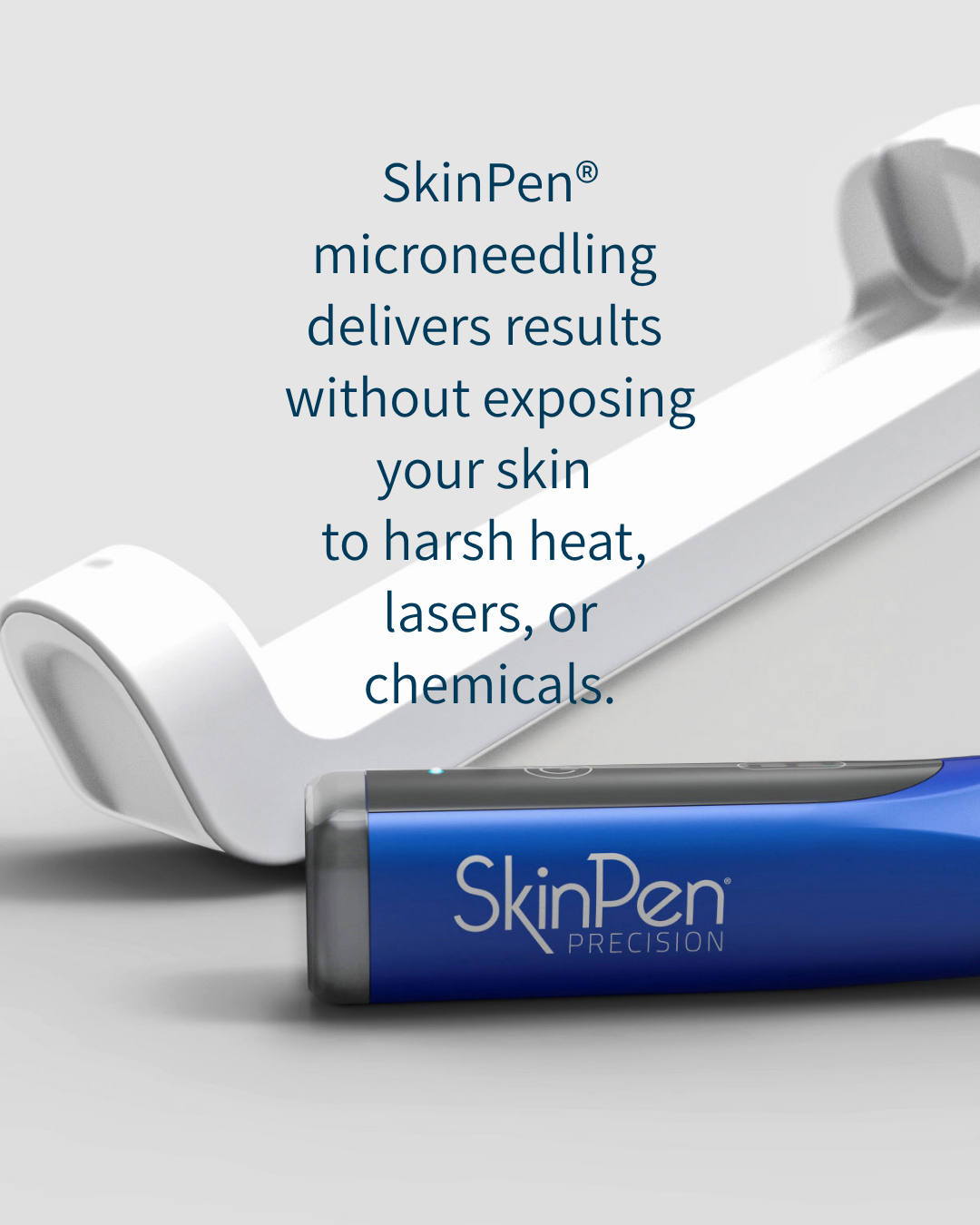
The SkinPen lets me set and adjust needle depth precisely throughout the treatment. That means I can go deeper where the scarring is more significant and shallower where I'm working on texture and surface. In a single session, I can treat very different areas of your face appropriately for each of them.
It also creates clean, vertical channels rather than dragging across the skin — which matters when we're working on tissue that's already been through trauma. The last thing scarred skin needs is more tearing.
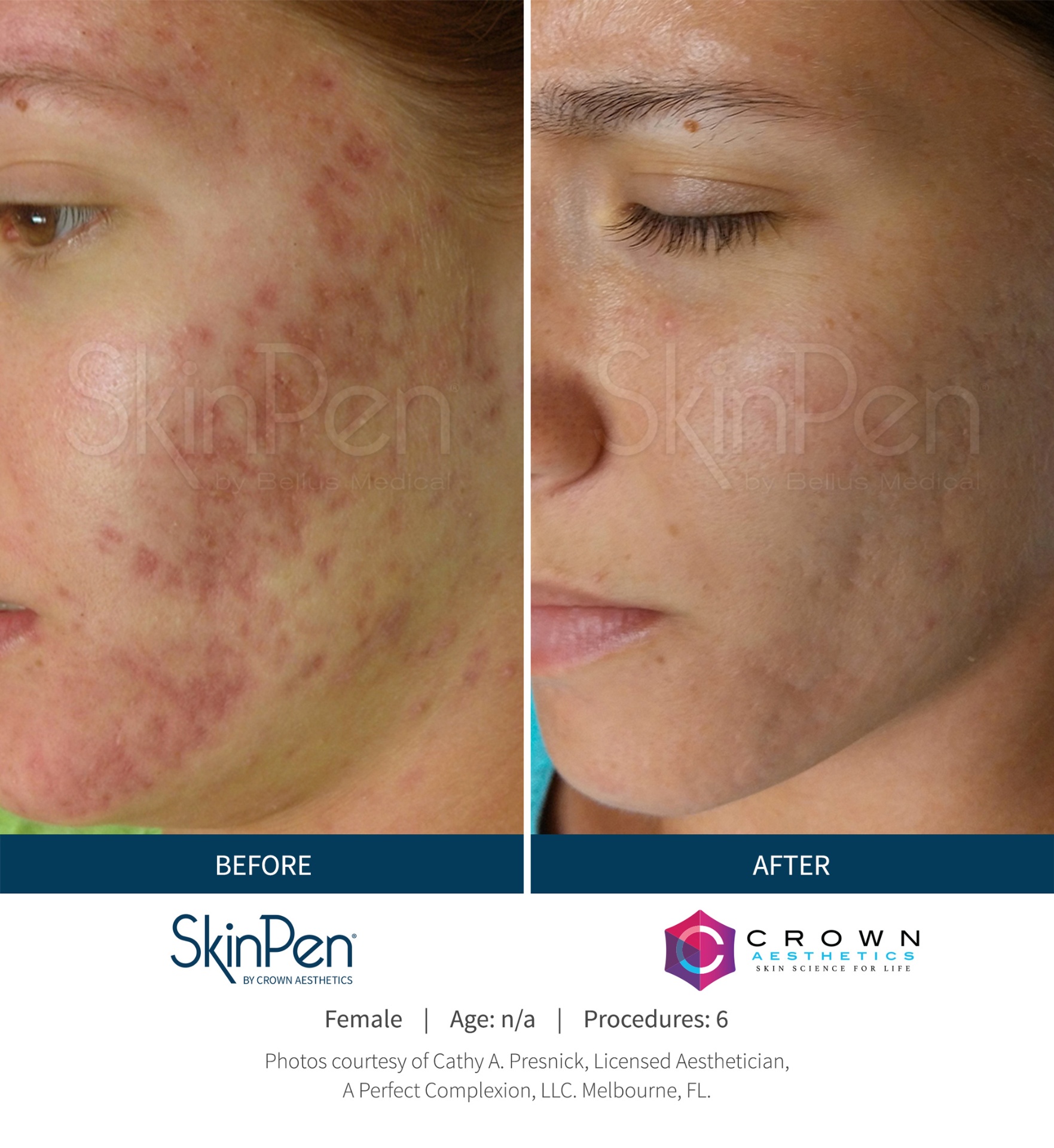
What results actually look like — honestly
I want to be straight with you about this, because scarring content online tends toward the before-and-after photo that makes it look like magic.
Microneedling is not magic. It is a process, and it takes time.
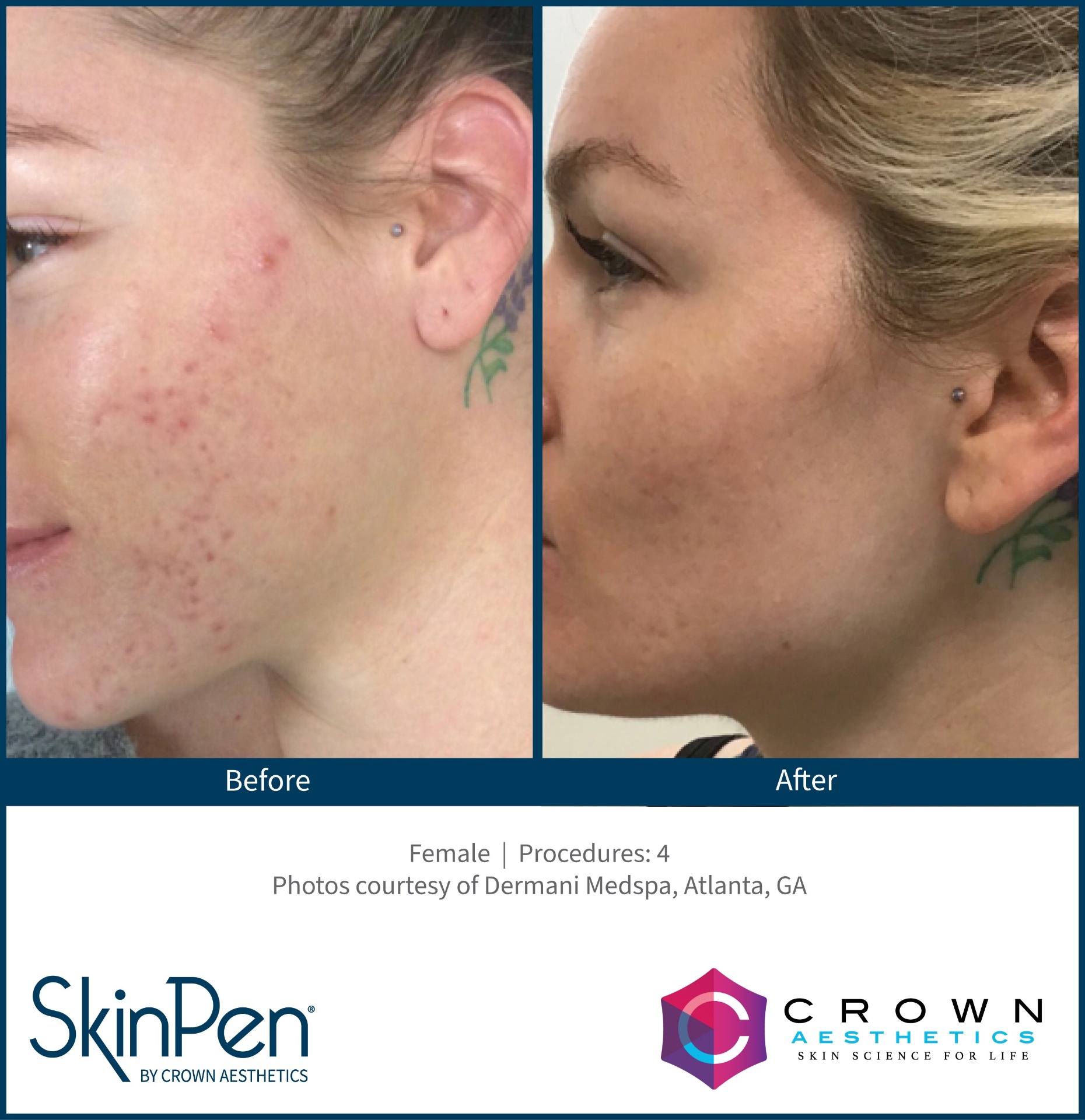
After a single session, many clients notice an improvement in skin texture and tone — a smoothness that wasn't there before, a slight softening of the shadow in rolling scars. Some clients with deeper scaring notice very little after the first session. Both are normal. The collagen building triggered by treatment continues for weeks after each appointment.
The most significant change with a course of three usually shows up around 8 to 12 weeks after the final session — not immediately after it.
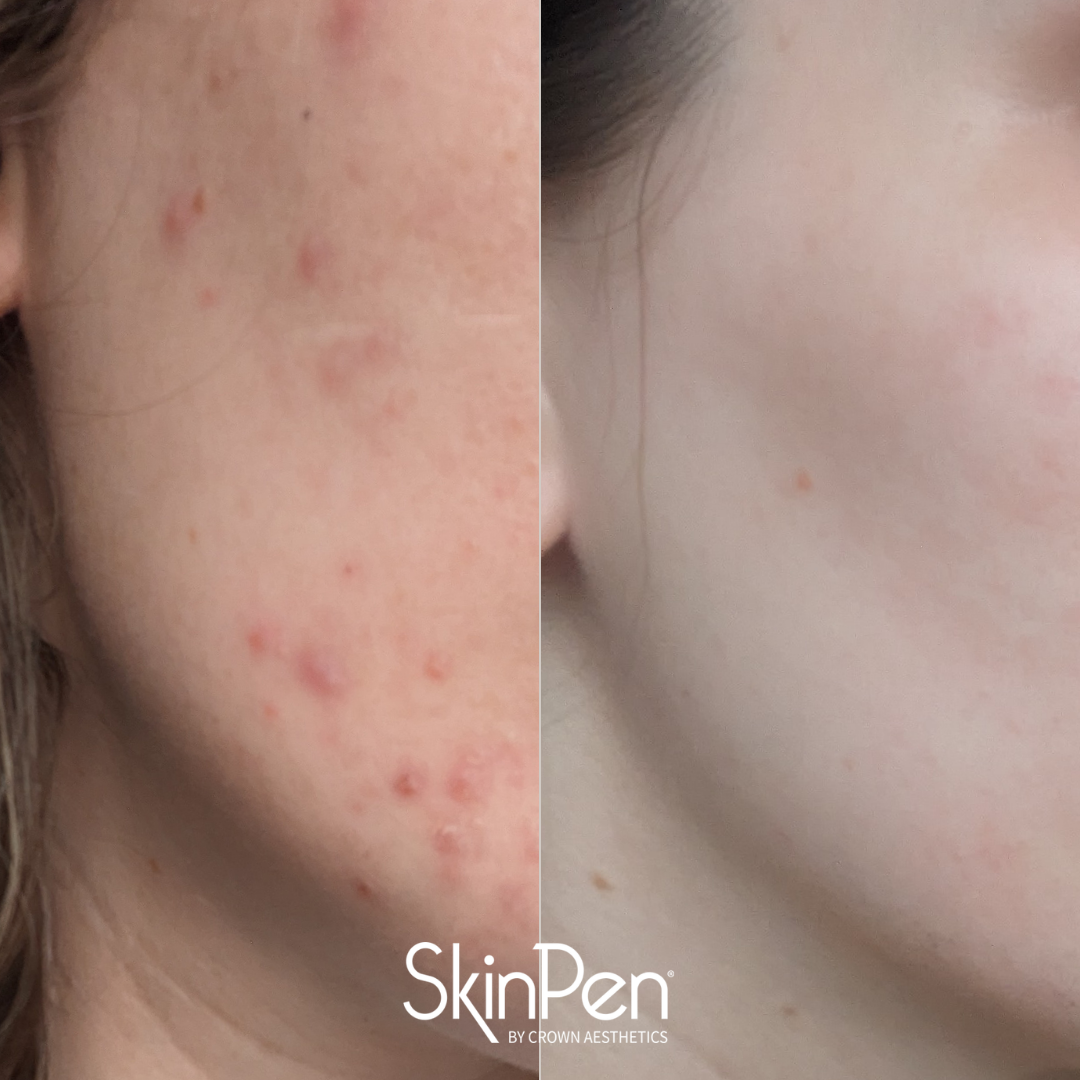
What I can tell you from treating my own skin and my clients' skin: the improvement is real, it's lasting (not just a temporary glow), and for most people with rolling and boxcar scarring, a course of three produces a meaningful, visible difference.
How many sessions for acne scarring?
Acne scaring requires more sessions of microneedling than you would expect for texture or early ageing.
A course of three sessions, four to six weeks apart, is the standard starting point. For rolling and shallow boxcar scarring, that's often enough to see a result you're happy with. For deeper, longer-standing scarring — especially scarring that's been there for many years — a second course of three is sometimes where the real change happens.
Scarring takes patience. Anyone promising dramatic results from a single session is not giving you an honest picture.
After your initial course, maintenance sessions at £170 keep collagen production going and protect the results you've worked for.
Is microneedling right for your acne scars?
The honest answer is: it depends on your scar type, your skin, and what's realistic for you specifically.
If you have rolling scars, boxcar scars, or a generally uneven texture left over from acne — and your skin doesn't have active breakouts or keloid history — microneedling is likely a good fit. We'd confirm that in consultation.
If you have significant ice pick scarring, I'd tell you that too, and we'd talk about what approach makes the most sense.
I'm not trying to sell you a course if it's not the right treatment for your skin. I've been where you are — frustrated, having tried things that didn't work — and I'd rather lose a booking than give you a result you're disappointed with.
Where I treat
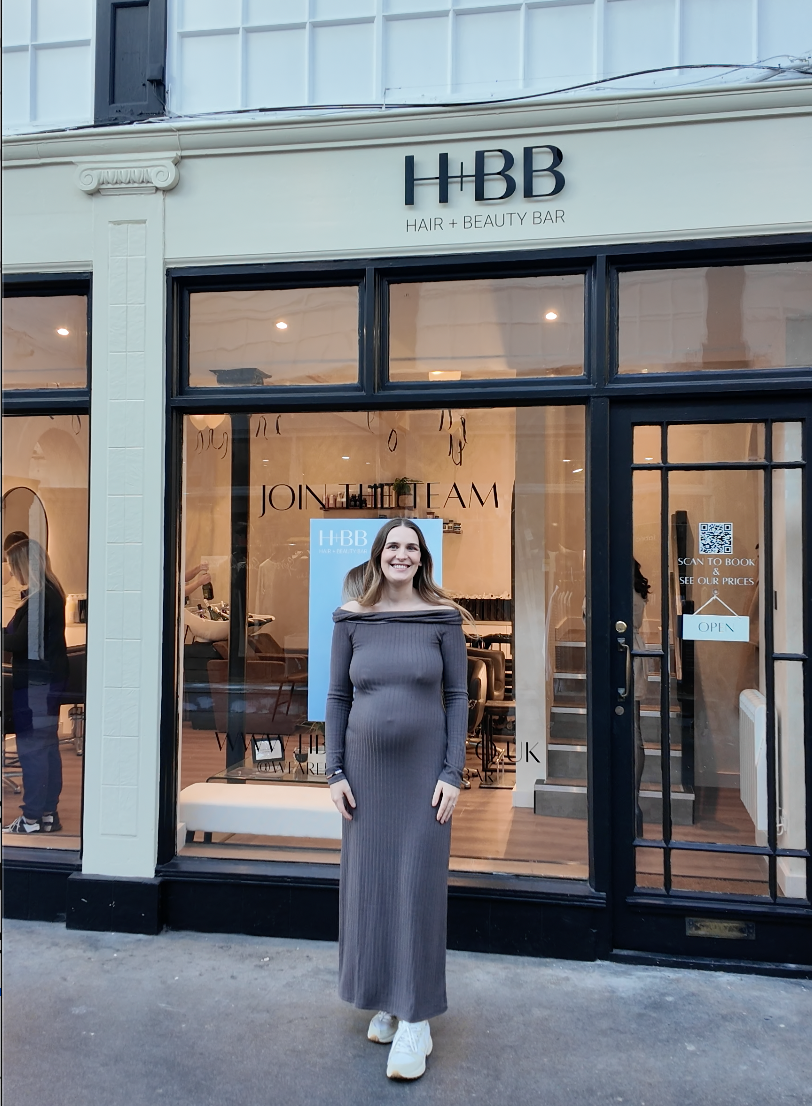
I treat at Hair + Beauty Bar in Hitchin, Hertfordshire, and I work Saturdays. I see clients from Hitchin, Letchworth, Stevenage, Baldock, Harpenden, and the surrounding area.
Pricing
All prices VAT inclusive:
- Face only — £200
- Face, neck and décolletage — £230
- Backs of hands add-on — +£20
Course pricing:
- Course of three, face only — £540 (saving £60)
- Course of three, face, neck and décolletage — £630 (saving £60)
Post-course maintenance sessions — £170
How to get in touch
Send me a DM on Instagram (@the_microneedling_facialist) or use the contact form on this site. I'll send you a consultation form, we'll talk through your skin and your scars, and I'll give you an honest view of what's possible.
If it's not the right treatment for you, I'll say so. That matters to me more than filling a slot.
Amy x
Amy Halls is a CIBTAC-trained facialist based in Hitchin, Hertfordshire, and a finalist for the CIBTAC/BIBTAC Facialist of the Year Award 2024. She specialises in SkinPen microneedling for acne scarring, skin texture, and early signs of ageing.
Frequently asked
Frequently asked questions
Amy Halls
CIBTAC & BABTAC qualified facialist based in Hitchin, Hertfordshire. Specialising in SkinPen microneedling for skin renewal and confidence.
More about Amy →